
What Is President Curtis and Why Does It Matter?
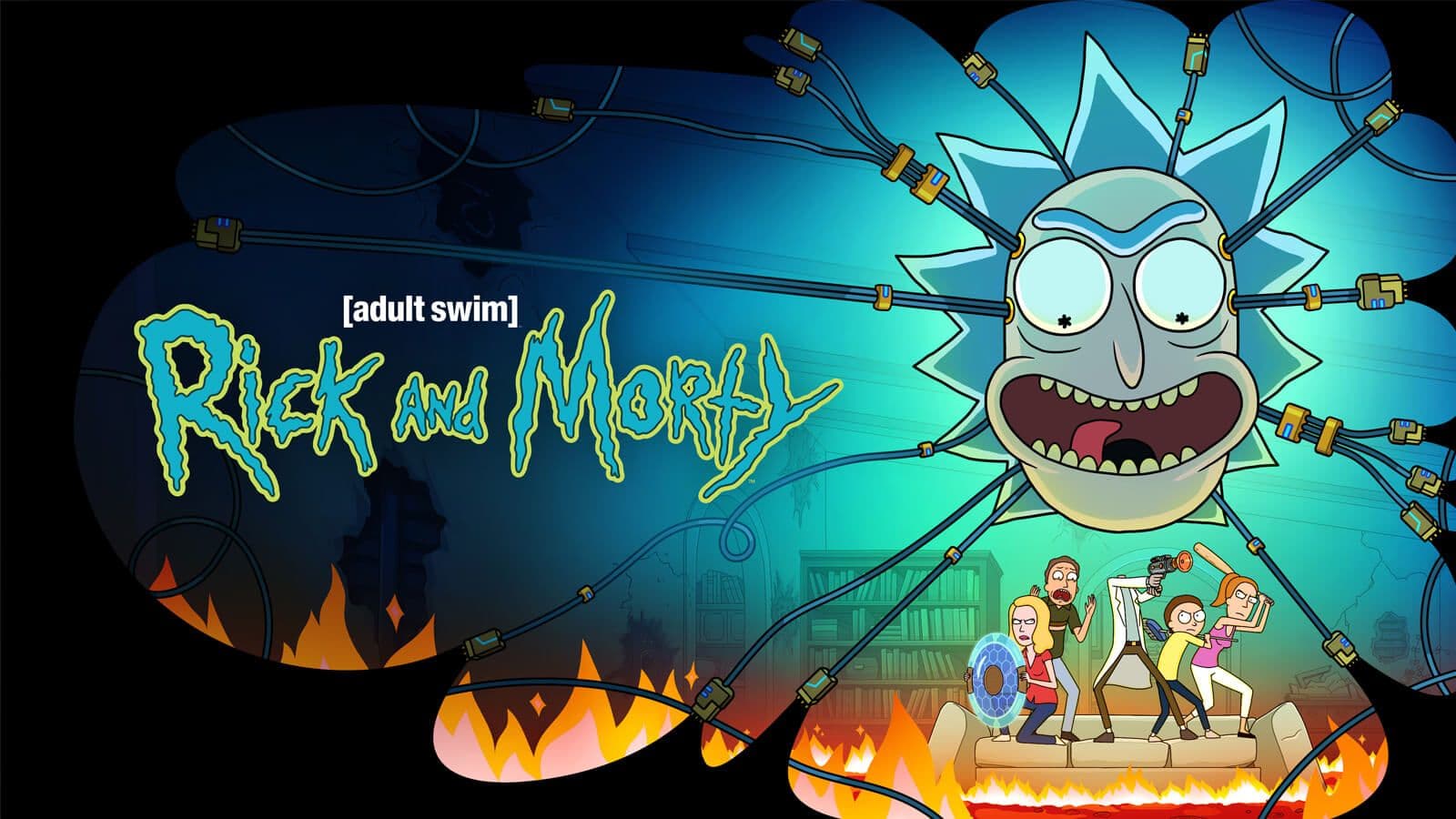
Animated spinoffs are a high-stakes gamble in television. For every Better Call Saul — a spinoff that arguably surpassed its parent show — there are a dozen forgotten attempts that quietly disappeared after a single season. President Curtis, the latest expansion of Adult Swim's Rick and Morty universe, steps into this complicated territory with a clear mission: prove that the franchise can sustain life beyond its two central characters.
The show focuses on a supporting figure from the original series, building an independent narrative that still orbits the chaotic, multiverse-hopping world fans have come to love since Rick and Morty premiered in December 2013. Whether it succeeds as a standalone piece of television is one question. Whether it matters for the future of the franchise — and for adult animation broadly — is a far bigger one.
The Franchise Behind the Spinoff
To understand President Curtis, you need to understand just how dominant Rick and Morty has become as a cultural institution. Created by Dan Harmon and Justin Roiland, the series built one of the most passionate fanbases in modern animation. By its seventh season, the show had navigated one of the most turbulent behind-the-scenes transitions in recent television history: the departure of co-creator Justin Roiland in January 2023 following domestic violence allegations.
Rather than canceling the series, Adult Swim replaced Roiland with voice actors Ian Cardoni (Rick) and Harry Belden (Morty) — a decision that initially drew skepticism but ultimately helped the show maintain its creative momentum. Season seven, which aired in late 2023, drew strong viewership numbers and demonstrated that the Rick and Morty brand was larger than any single personality attached to it.
That resilience is precisely what makes a spinoff viable. Adult Swim and parent company Warner Bros. Discovery hold a property with proven audience loyalty, a rich mythology, and enough secondary characters to populate an entirely separate series. President Curtis is the first structured attempt to act on that potential.
Playing It Safe — and Why That's a Legitimate Strategy
The creative approach behind President Curtis appears measured rather than revolutionary. The spinoff doesn't attempt to reinvent the Rick and Morty formula wholesale. Instead, it uses the established tone — sharp satirical writing, absurdist sci-fi premises, and dark comedic undercurrents — as a foundation, applying them to a new central character and a new set of storytelling priorities.
This is, frankly, the smart play. Animated spinoffs that stray too far from their source material often alienate the core audience without successfully attracting a new one. The history of adult animation is littered with ambitious experiments that collapsed precisely because they overcorrected — trying so hard to differentiate themselves that they lost the essence of what made the original compelling.
Playing it safe, in this context, means honoring the franchise's established language while slowly introducing new rhythms. It's a strategy that takes patience from both creators and viewers, but when executed well, it creates the runway necessary for a spinoff to eventually develop its own creative identity.
Adult Animation's Spinoff Problem — and Opportunity
The broader industry context here is worth examining. Adult animation has historically struggled to make spinoffs work at scale. The Simpsons remains the towering example of a show that never needed one, while attempts to expand universes like Futurama or Family Guy into full spinoff territory have produced mixed results at best.
What's changed in recent years is the streaming economy. Platforms are increasingly hungry for franchise content that can attract existing audiences with minimal marketing spend. A Rick and Morty spinoff arrives pre-loaded with brand recognition, a dedicated subscriber base, and algorithmic advantages on any platform where it lives. According to industry analysts, franchise-adjacent content consistently outperforms original programming in first-week viewership metrics — a reality that shapes every greenlight decision at major networks and streamers.
Adult Swim, operating within the Warner Bros. Discovery ecosystem, has particular incentive to extend its animation franchises given the competitive pressure from Netflix, Hulu, and Amazon in the adult animation space. President Curtis is as much a business decision as it is a creative one.
What the Original Characters' Cameos Signal
One of the more telling creative choices in President Curtis is how it handles Rick and Morty themselves. Rather than sidelining them entirely — which would risk feeling like a hard break — the spinoff allows them to appear in a limited capacity, effectively blessing the new series while establishing its independence.
This technique mirrors what Better Call Saul did with Walter White and Jesse Pinkman: use the original characters sparingly, strategically, and emotionally. Their presence signals continuity without creating dependency. It tells longtime fans that the spinoff exists within the world they love, while making clear that President Curtis will find its own reasons to be watched.
The fact that Ian Cardoni and Harry Belden reprise their roles — rather than introducing new voice actors for even these brief appearances — also reinforces cast consistency across the franchise, an underrated element in building audience trust.
Why This Matters for the Future of the Rick and Morty Universe
The deeper significance of President Curtis lies in what it represents as a precedent. If the spinoff performs well — sustaining viewership across its episode run and generating positive critical reception — it opens the door for the Rick and Morty universe to expand in more ambitious directions. Additional character spinoffs, anthology formats, or even feature-length projects become more viable with each successful extension.
Conversely, a stumble here could make Adult Swim more conservative about franchise expansion at a time when the original show still has creative momentum. The stakes, in other words, extend well beyond this single series.
For viewers, President Curtis is an invitation to see whether the world of Rick and Morty is truly a universe — one capable of supporting multiple stories simultaneously — or whether it remains a solar system with one irreplaceable sun at its center.
Based on what the spinoff appears to be doing, the answer is cautiously optimistic. It won't rewrite the rules of adult animation overnight. But it doesn't need to. It just needs to keep the franchise cruising — and on that count, it seems to be doing exactly what it set out to do.