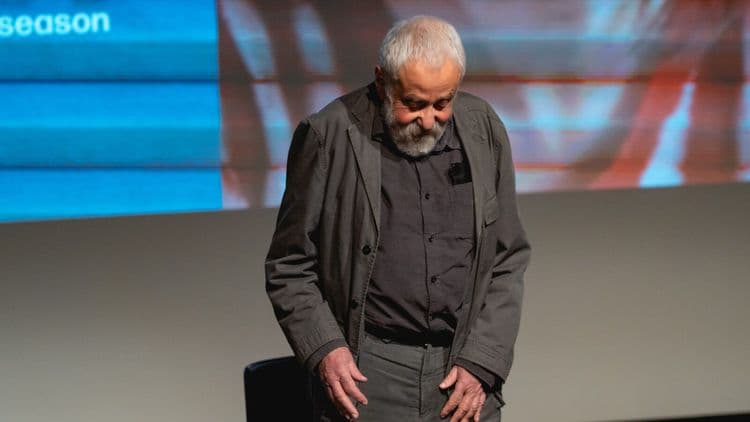


The Director and the Actress: A Shared Vision for Challenging Cinema
Belgian-French actress Virginie Efira has positioned herself as an unconventional voice in contemporary European cinema, and nowhere is this more evident than in her collaboration with legendary director Paul Verhoeven on the historical drama 'Benedetta.' Rather than distancing herself from the film's controversial reception, Efira has become an articulate advocate for the project's artistic merit and thematic ambition.
Verhoeven, whose filmography includes provocative works like 'Showgirls' (1995) and 'Basic Instinct' (1992), has long challenged audience comfort zones. His approach to 'Benedetta' continues this tradition, transforming a 17th-century historical account into a meditation on desire, faith, and institutional power. The film follows its titular protagonist through a clandestine romance within convent walls, territory that major studios and risk-averse producers typically avoid.
Embracing Rather Than Apologizing
When approached about the explicit content in 'Benedetta,' Efira reportedly responded with enthusiasm rather than hesitation. This reaction reveals something significant about how seasoned performers evaluate material. Rather than defaulting to industry-standard caution around potentially offensive content, Efira assessed the narrative framework, directorial vision, and character complexity first.
The actress's background helps contextualize this choice. Efira has built a career that spans mainstream commercial cinema and auteur-driven projects, understanding both the commercial pressures and artistic imperatives that shape film production. Her willingness to engage with controversy signals confidence in her own judgment and artistic instincts.
The Verhoeven Legacy and Contemporary Cinema
Paul Verhoeven represents a specific approach to filmmaking that refuses self-censorship or preemptive apologetics. Across his five-decade career, he has maintained that artistic authenticity sometimes requires depicting human experiences—including sexuality, violence, and transgression—with unflinching directness. His Dutch background and European sensibilities inform this perspective, as does his longstanding engagement with genre cinema and exploitation aesthetics reimagined through auteur-level sophistication.
When Verhoeven works with actors like Efira, he seeks collaborators who understand this philosophical framework. The chemistry between director and performer in such projects depends less on shared politics than on shared commitment to the material's integrity.
Global Reactions and Cultural Divides
The international response to 'Benedetta' illuminated ongoing cultural divisions regarding representation of sexuality, religion, and institutional critique. Protests emerged in multiple countries, with particular intensity in regions where Catholicism maintains significant cultural and political influence. Some organizations called for censorship or restricted distribution, while others attempted to disrupt festival screenings and theatrical releases.
These reactions, while predictable given the subject matter, also underscored legitimate questions about how cinema depicts religious communities and sacred spaces. Yet within film criticism and festival communities, 'Benedetta' found defenders who argued its explicit content served thematic purposes rather than functioning as gratuitous provocation.
The Actor's Responsibility in Controversial Work
Efira's public defense of the film raises broader questions about performer responsibility when starring in controversial material. Some actors maintain diplomatic silence, allowing films to speak for themselves while they move to safer projects. Others actively defend their artistic choices, articulating the reasoning behind accepting roles others might decline.
Efira's approach belongs to the latter category. By discussing her comfort with the material's explicit nature and her enthusiasm for collaborating with Verhoeven, she stakes her artistic credibility on the project's merit. This represents a form of professional courage that extends beyond the physical or emotional labor of performance itself.
Recognition at International Film Festivals
Efira's appearance at prestigious film festivals to discuss and celebrate 'Benedetta' signals institutional validation. Major festivals worldwide have consistently programmed the film despite knowing it would generate controversy, indicating that festival leadership recognized artistic substance beneath the provocative surface. Awards recognition—such as Efira's Leopard Club Award—represents validation from film industry professionals and critics rather than general audiences, many of whom may never encounter the film.
This distinction matters significantly. Festival circuits operate according to different values than commercial multiplexes, with programming decisions prioritizing artistic innovation and industry prestige over box-office potential or controversy avoidance. Efira's participation in these circuits affirms her position within a specific film culture that values ambitious risk-taking.
Why This Matters
The dynamics surrounding 'Benedetta' and Efira's response illuminate ongoing tensions within contemporary cinema. As streaming platforms and international co-productions reshape film financing and distribution, questions about artistic boundaries become increasingly urgent. Some argue that platforming controversial material requires robust institutional support and artistic conviction. Others contend that artistic freedom includes the freedom to avoid content deemed offensive to significant constituencies.
Efira's perspective suggests that mature artistic culture requires space for projects that challenge, provoke, and potentially offend. Her career trajectory—balancing mainstream visibility with auteur collaboration—demonstrates that actors can maintain professional viability while supporting provocative material. This carries implications for future filmmakers considering ambitious projects that might generate protest.
The 'Benedetta' controversy also reflects broader questions about who controls cultural representation. When religious institutions or conservative organizations attempt to suppress films, they engage in legitimate advocacy within pluralistic societies, but whether such advocacy should translate into actual suppression remains contested. Efira's willingness to work on the film and defend it afterward represents one answer to these complex questions—not definitive, but thoughtful and articulate.
The Broader Conversation
Ultimately, the 'Benedetta' story—from production through controversy to festival recognition—demonstrates that contemporary cinema remains a contested cultural space. Major filmmakers like Verhoeven continue pushing boundaries, actors like Efira continue supporting ambitious work, and audiences and advocacy groups continue responding with conviction, whether positive or negative. This ongoing negotiation shapes what stories get told, how they get told, and which voices gain platforms to discuss them. Rather than resolving these tensions, successful artistic culture learns to navigate them with nuance, integrity, and ongoing dialogue.