
More than three decades after its original release, Neil Jordan's gothic vampire film "Interview with the Vampire," starring Brad Pitt and Tom Cruise, is now available in 4K and on 4K UHD Blu-ray. The new release includes never-before-seen deleted scenes along with two special features: "Eternal Night and Deadly Light," in which Jordan and film editor Mick Audsley discuss the cinematography and gothic romanticism achieved by director of photography Philippe Rousselot, and "Interview with the Vampire: Creating the World," in which Jordan and production designer Dante Ferretti walk through the film's detailed sets, augmented locations and costumes.
Speaking with Variety about the release, Jordan said the restoration allowed the film to be brought back to its original form. "We can restore the movie to the way we originally shot it," he said, recalling that the last time he saw the film was at its 25th anniversary screening, where a requested 35mm print from Warner Bros. was nearly unwatchable. "Either the cinema or the projector lights were so low, or the print had been so degraded or something, it was so dark I couldn't see the film," he said. "To be able to restore it, and to scan it frame by frame, is just a wonderful opportunity."
On the deleted scenes, Jordan admitted he doesn't fully know why some material was cut, including one he described as "dramatic," "bloody" and "tortured." He speculated it may have come down to length, or that the character Louis's expressions of suffering were becoming excessive.
Jordan credited Anne Rice with reshaping the vampire archetype established by Bram Stoker's "Dracula," relocating it to 18th- and 19th-century French Louisiana and centering the story on the burden of eternal life. He said Rice's work influenced the "Twilight" novels, though in his view it made them "far too cutesy and Heathcliffian." Jordan described his film as ultimately about a doomed family, pointing to the significance of the child vampire Claudia, who is around six years old in the book, as central to that theme.
He also recalled resisting studio pressure to make the film conventionally scary, noting the difficulty of frightening "the scariest creature that has ever existed," and said the terror instead had to come from within the characters and the toll of time itself. On the technical side, Jordan noted the film predated heavy reliance on CGI — the production built and burned a New Orleans set, filming it with cameras positioned across the Mississippi River, with effects supervisor Rob Legato, who had just co-founded Digital Domain with James Cameron.
The most difficult sequence to shoot, Jordan said, involved Cruise's character bringing a prostitute to his room, where she gradually realizes she is with two vampires; Lestat then forces Louis to confront his true nature. That sequence took about eight days to film. Jordan also recalled a preview screening arranged by David Geffen and Warner Bros., after which the audience deemed the film too long, prompting further edits.
Asked about IMAX, Jordan said he had discussed the format with Christopher Nolan but wasn't sure he could manage the cameras, expressing his preference for handheld 35mm filmmaking. He said he would consider IMAX if he makes another big studio film. He also described "Interview with the Vampire" as a companion piece to his earlier film, "The Company of Wolves."
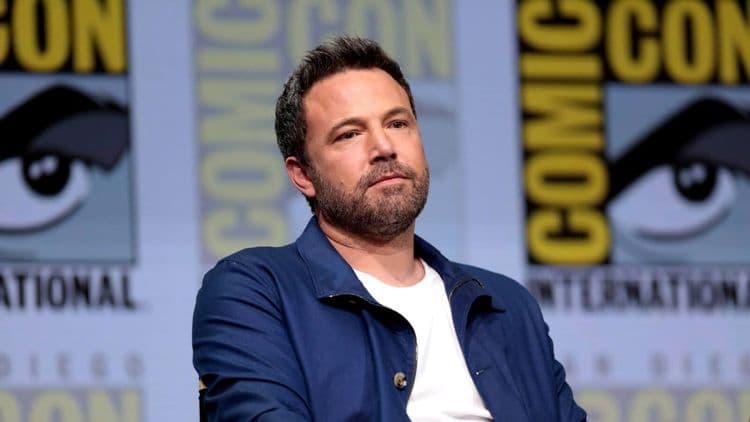
Photo: GabboT, CC BY-SA 2.0, https://creativecommons.org/licenses/by-sa/2.0, via Wikimedia Commons