

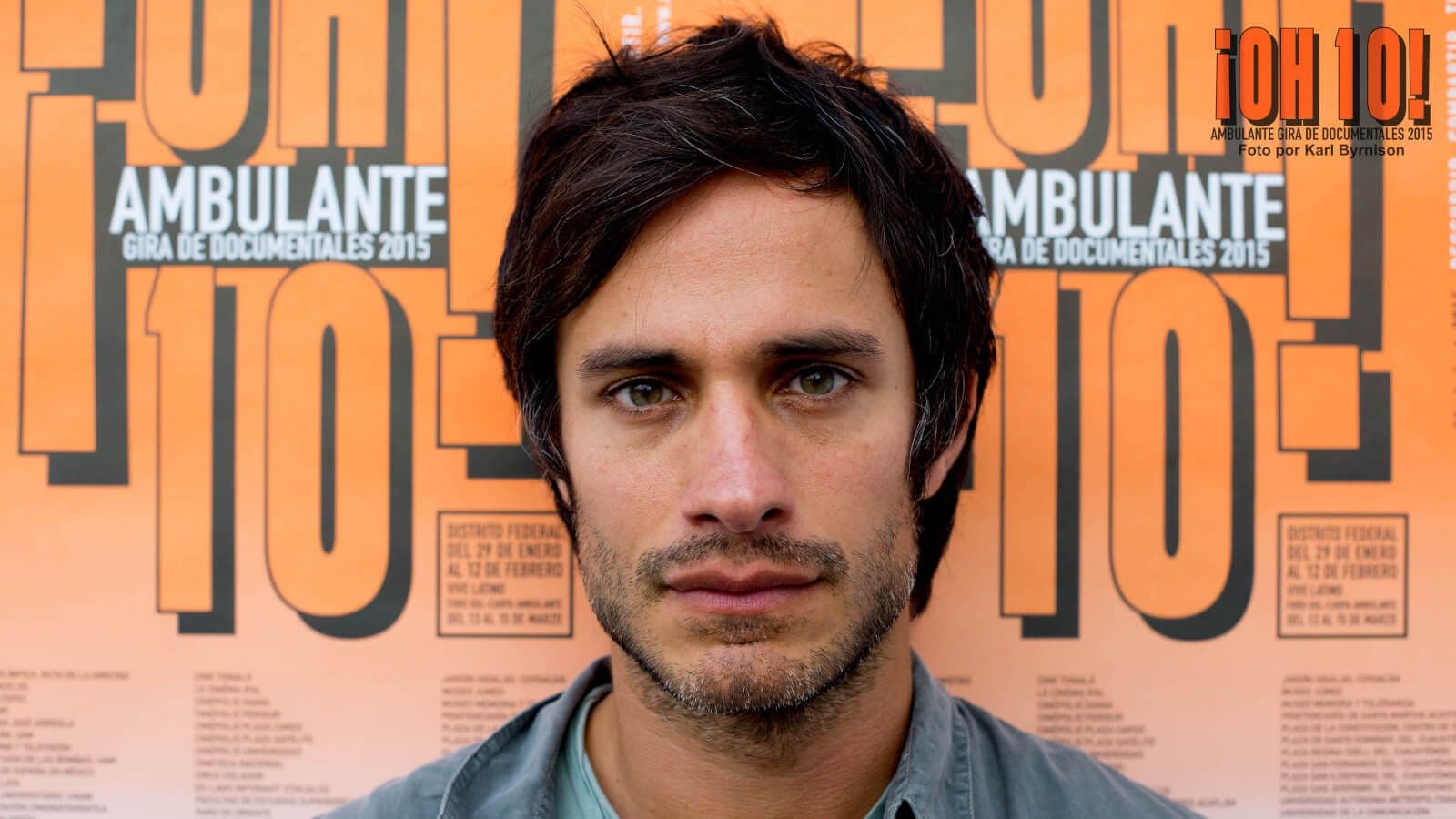
Gael García Bernal has directed himself in his third feature film, "Hombre al agua," which world premiered at the Venice Biennale before making its North American debut at the Toronto International Film Festival (TIFF).
García Bernal, who broke out internationally with "Amores Perros" (2000) and "Y Tu Mama Tambien" (2001), has built a parallel career as a director exploring class dynamics. His first two films, "Déficit" (2007) and "Chicuarotes" (2019), examined class tensions — the former set at a wealthy teen's party, the latter following two working-class teens trying to improve their circumstances. "I think class is undoubtedly a theme I'm drawn to, partly because the struggle has not been resolved. At the same time, class has been changing rapidly, with circumstances and public attention shifting considerably since I started working in cinema. So, it felt important to explore it, but also to question where we are we now and where we are heading," he told Variety.
In "Hombre al agua" — roughly translated as "man overboard" — García Bernal plays Camilo, a Cuban lifeguard who rescues Mexican businessman Abel from drowning. Grateful, Abel brings Camilo to Mexico to serve as his right-hand man and introduces him to his daughter, Juana, whom Camilo later marries. Camilo eventually realizes his new life is part of a carefully orchestrated plan and sets out to take control of his future as his marriage unravels. "I also wanted to explore the crisis of masculinity, the roles of men and women within a couple, and the experience of separation. I wanted to do all of this through comedy, with a kind of meta-cinematic playfulness, while also looking at the political landscape in Latin America today: where we are, what is happening and where we are going," García Bernal said.
Reflecting on "Amores Perros" 25 years after its release, he said: "When it came out, it became something extraordinary and transcended time. Twenty-five years later, we're still celebrating it. I hope my film will also transcend time in some way, but that's something we can never know. Only time will tell. I do hope it says something, because I think it is very relevant to the world we're living in right now." He added: "It's amazing how a film can affect people's lives – not only the people who made it, but also those who watched it. That's the wonder of cinema. There's always a strange alchemy to it. So, I'm very aware, making 'Hombre al agua,' of how grateful I am to have this opportunity to make the film, to give it our best and to enjoy the process."
García Bernal also credited directors he's worked with for shaping his approach. "From the first two directors I worked with, Alejandro González Iñárritu and Alfonso Cuarón, I learned the value of relentless effort and rigor and of making the most of every opportunity—always pushing to find that extra thing. I also learned from their complete involvement in their films, while understanding how to manage the frustration and disappointment that can come with that level of commitment," he said. Of Walter Salles, who directed him in "The Motorcycle Diaries," he said: "He taught me about friendship and the way he approaches work—with generosity, joy and a huge sense of camaraderie." He also cited Michel Gondry, who directed him in "The Science of Sleep": "Everything has to be worked out in front of the camera, like a play: instead of discussing it, let's try it." And from Pablo Larraín, who directed him in "No," "Neruda" and "Ema," he said he learned "a kind of audacity – let's just go for it, let's try it, let's break it."
García Bernal began writing "Hombre al Agua" eight or nine years ago with Argentine playwright Mariano Pensotti. "The film isn't linear, so I needed that support—the back-and-forth of ideas. He helped me put everything together, shape the structure and begin building the whole world of the film," he said.
The Latin American cast includes Esmeralda Pimentel ("Almost Paradise"), Debóra Nascimento, Natalia Oreiro and Jorge Salinas ("Amores Perros"). The film was shot mainly in the Mexican state of Yucatán, including locations near Mérida and a beach at Sisal, along with scenes in Mexico City, plus three days of shooting in Havana in December. "Cuba has its usual logistical challenges, but we had a very light schedule there, so it was quite easy and enjoyable. Havana was also important because it was the only urban setting we wanted to show in the film," García Bernal said.
Securing financing proved to be the biggest hurdle. According to García Bernal, every attempt to cast a Cuban actor as Camilo caused investor interest to drop. The film was ultimately produced by La Corriente del Golfo — the company García Bernal founded with Diego Luna — along with Cárcava Cine ("The Untamed") and Stacy Perskie's Redrum ("Spectre," "Bardo"). "Apparently, everything now has to be thoroughly and mathematically proven. But that's impossible with film, because the nature of filmmaking is exploration. To paraphrase Werner Herzog, 'if you want something completely factual, read a phone book.' It's very difficult today to convince companies to take a chance on an adventure, especially with original films that aren't based on established IP. The film may look expensive, but fortunately we made it with very little money and we're very happy with the result," García Bernal said.
Photo: Festival Ambulante, CC BY-SA 2.0, https://creativecommons.org/licenses/by-sa/2.0, via Wikimedia Commons