
The Most Anticipated Horror Series of the Streaming Era
When Prime Video drops all eight episodes of Mike Flanagan's Carrie on October 7, it will mark one of the most consequential moments in the ongoing battle between streaming giants for prestige horror content. The series, based on Stephen King's landmark 1974 debut novel, represents not only a major franchise event but also the latest chapter in Flanagan's extraordinary run as the defining horror auteur of the streaming age.
For fans of elevated horror television, the question isn't simply whether Carrie will be terrifying — it's whether Flanagan's long-form approach will finally give King's deeply human story the space it has always deserved.
Why Mike Flanagan Is the Right Filmmaker for This Story
Mike Flanagan has spent the better part of a decade building one of the most remarkable bodies of work in contemporary horror. His Netflix run — which included The Haunting of Hill House (2018), The Haunting of Bly Manor (2020), Midnight Mass (2021), The Midnight Club (2022), and The Fall of the House of Usher (2023) — established him as a filmmaker with an uncommon gift for translating literary horror into emotionally resonant television.
His transition to Prime Video signals a major shift in the streaming landscape. Amazon's investment in Flanagan is a direct acknowledgment that prestige horror, when executed at the highest level, can anchor an entire content strategy. Carrie is not simply another IP acquisition — it is the centerpiece of a creative partnership built on a proven track record.
Flanagan's storytelling strength has always been his ability to center trauma and grief within supernatural frameworks. Carrie, at its core, is a story about a young woman crushed by religious fanaticism, social cruelty, and maternal abuse — a narrative that demands exactly the kind of patient, character-driven construction that Flanagan consistently delivers.
A Story That Has Never Stopped Resonating
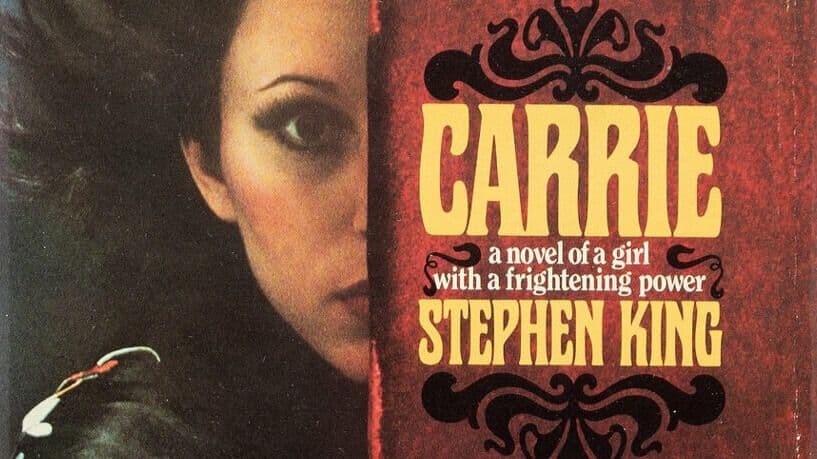
Stephen King published Carrie in 1974 as his debut novel, and it remains one of the most culturally persistent works in American horror literature. The story of Carrie White — a telekinetic teenage girl raised by a fanatically religious mother who unleashes catastrophic destruction after a prom night humiliation — has been adapted for screens multiple times across five decades.
Brian De Palma's 1976 film adaptation starring Sissy Spacek and Piper Laurie is widely considered a masterpiece of American cinema, earning two Academy Award nominations. A television movie followed in 1999, and a theatrical remake starring Chloë Grace Moretz arrived in 2013. The story was also adapted into a Broadway musical in 1988, though that production famously closed after just five performances.
Despite this rich adaptation history, no version has ever had the runway of a full eight-episode series. Every prior screen incarnation has been forced to compress and prioritize, inevitably leaving significant portions of King's novel — particularly the novel's epistolary structure, which incorporates news reports, academic papers, and survivor testimonies — largely unexplored.
What a Series Format Changes Everything
The decision to tell this story across eight episodes is arguably the most creatively significant structural choice in the project's history. King's novel is dense with world-building, secondary characters, and layered social commentary that no feature film can adequately accommodate.
A serialized format allows the creative team to build the town of Chamberlain, Maine as a fully realized ecosystem — exploring the social hierarchies of Ewen High School, the institutional failures that enable Carrie's abuse, and the psychological complexity of characters like Sue Snell and Chris Hargensen, who in most adaptations function more as archetypes than fully developed human beings.
Flanagan has consistently demonstrated his willingness to interrogate the interior lives of supporting characters in ways that elevate ensemble storytelling. If applied here, audiences may encounter versions of these characters unlike anything previously committed to screen.
The Comic-Con Reveal and What the Teaser Signals
The decision to unveil the first teaser trailer and release date at San Diego Comic-Con reflects a deliberate strategy. Comic-Con has re-emerged as the premier destination for prestige genre announcements, and placing Carrie at the center of that conversation signals Prime Video's confidence in the project as a major cultural event, not merely a content drop.
Revelations made at major conventions tend to generate sustained fan engagement across social platforms, extending the marketing lifecycle well beyond the initial announcement window. For a series premiering in early October — historically the most competitive period for horror content given its proximity to Halloween — building awareness months in advance is a critical strategic advantage.
Why This Matters for the Streaming Horror Landscape
The arrival of Carrie on Prime Video reflects a broader industry pattern that has accelerated significantly since 2018: streaming platforms have identified prestige horror as one of the most reliable drivers of subscription engagement and cultural conversation.
Horror content consistently outperforms other genres in social media discussion per viewer, making it extraordinarily valuable for platforms competing for attention in an oversaturated content environment. According to analytics firm Parrot Analytics, horror and thriller content generates disproportionately high demand relative to its production cost when anchored by recognizable IP and auteur talent.
Flanagan's move from Netflix — where his shows regularly ranked among the platform's most-discussed originals — to Prime Video is precisely the kind of talent acquisition that reshapes competitive dynamics between streaming services. Prime Video is sending a clear message: it intends to own premium horror in the same way it has pursued prestige drama through shows like The Boys and Rings of Power.
For the Stephen King universe specifically, this adaptation arrives at a moment of remarkable creative activity. King adaptations are currently in various stages of production across multiple platforms, reflecting the enduring commercial and cultural value of his catalog more than fifty years into his career.
What to Expect When October Arrives
All eight episodes of Carrie premiere on October 7 on Prime Video — a release strategy that positions the series for maximum impact in the weeks leading up to Halloween. The full-season drop model, which Prime Video has used selectively for its biggest titles, invites binge-viewing while generating immediate, concentrated social conversation.
For longtime Flanagan collaborators and fans, the anticipation is built not just on the source material but on the question of how a filmmaker who has consistently redefined the ceiling of horror television will approach a story the genre has known for half a century.
The answer arrives on October 7. And if Flanagan's history tells us anything, it will be worth the wait.