

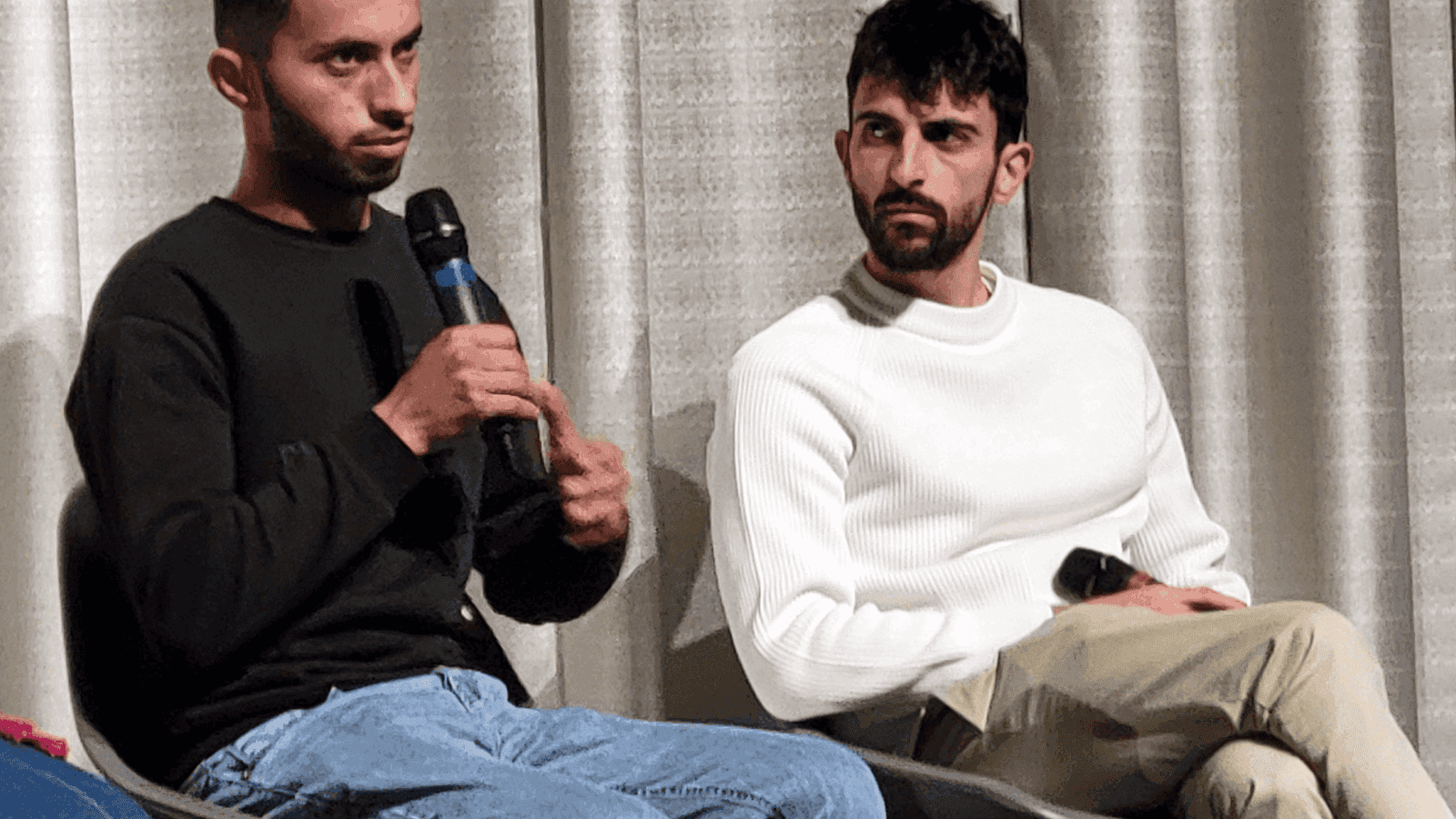
The Israeli Defense Force on Thursday issued an official, extensive response to NAZA, the whistleblower documentary built around anonymous interviews with two dozen IDF veterans of the Gaza war. The film, from Oscar-winning Israeli directors Yuval Abraham and Rachel Szor — the team behind No Other Land — presents what its subjects describe as Israel's deliberate and systematic targeting of civilians in Gaza. Its title, NAZA, is an acronym drawn from a Hebrew expression meaning "collateral damage."
In its statement, the IDF called the documentary's portrayal of its targeting process "distorted, misleading and disingenuous," asserting the film's narrative "is based on substantial factual errors stemming from a misrepresented and manipulative depiction of reality." The military said NAZA leaves out "context essential to understanding the war in Gaza," relies on "manipulative editing of interviews," and engages in "falsely and baselessly attributing malicious intentions to the IDF that the purported 'evidence' in the film does not substantiate."
Notably, the IDF acknowledged it has not actually seen the film. It said the filmmakers "did not submit their allegations to the IDF for examination and response before publication, and did not provide a copy of the film after its screening, although the IDF requested it." Instead, the military said its statement draws on "a detailed account by a representative who attended a public screening," along with other public accounts and the filmmakers' own public statements.
The IDF argued it takes "concrete steps [to] mitigate civilian harm" that it says the filmmakers leave out, and contended that the veterans interviewed are "addressing matters beyond their knowledge and competence," drawing sweeping conclusions from what the military described as "limited" intelligence exposure. "IDF directives prohibit targeting civilians," the statement reads, while acknowledging civilian deaths occurred but denying they stemmed from deliberate policy.
Addressing one interviewee's account of shootings of Palestinians trying to reach Gaza aid distribution sites, the IDF said that "in response to several tragic incidents involving civilian deaths in or around distribution centers," it conducted operational debriefs after which "lessons were learned and implemented, and additional instructions were issued."
The statement also "categorically" rejected claims made by several NAZA interviewees, in response to questions posed by Abraham, that Israel's conduct in Gaza amounts to genocide. "The allegation of 'genocide' is outrageous and unfounded, and the State of Israel has categorically rejected it," the IDF said, adding that "the filmmakers' choice to ask people who are not experts on the matter and do not know the internationally accepted definition of the term for their personal views on it, is manipulative, misleading and irrelevant."
NAZA premiered in competition at the Venice Film Festival, where it won a Special Jury Prize. It later had its U.S. debut at the New York Film Festival, screening before an enthusiastic crowd at Alice Tully Hall while a small but intense pro-Israel protest gathered outside the theater.
Photo: César, CC BY-SA 3.0, https://creativecommons.org/licenses/by-sa/3.0, via Wikimedia Commons