
When Broadway Meets the Big Screen: A New Era for Event Cinema
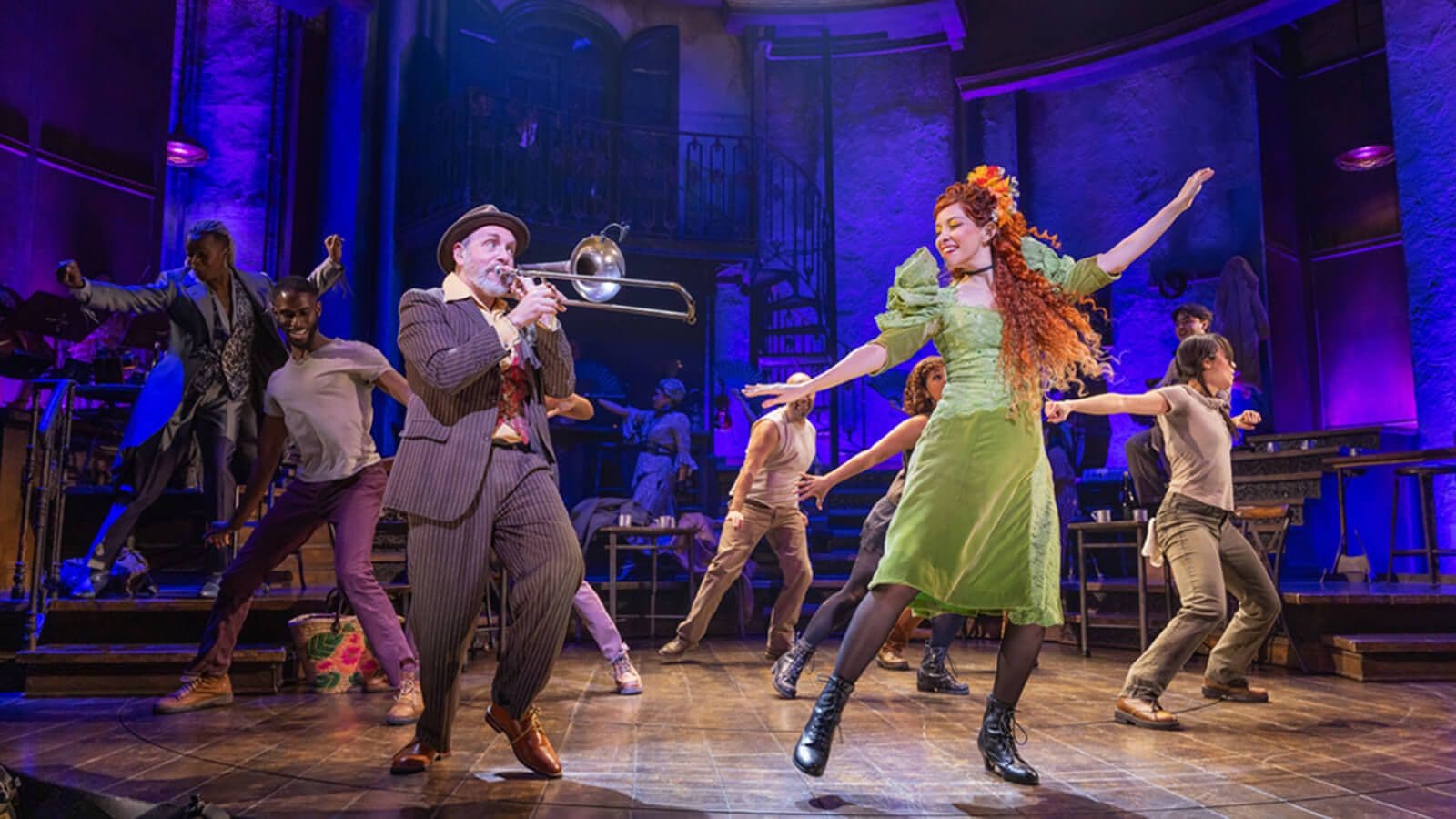
The relationship between live theater and movie theaters has always been complicated — one an art form built on presence and impermanence, the other designed for repeatability and mass reach. But the staggering box office performance of Hadestown: The Musical in its cinematic debut has done something remarkable: it has made that relationship look not just viable, but genuinely exciting.
Distributed by Bleecker Street through its newly launched event cinema label Crosswalk, in partnership with LD Entertainment, Hadestown: The Musical pulled in an estimated $9.7 million during its opening theatrical engagement across 1,949 screens. The result places it firmly at No. 4 on the overall specialty box office chart and, more significantly, positions it as the second-biggest opening ever recorded for a live show capture — a category pioneered in the mainstream consciousness by the Disney+ release of Hamilton in 2020.
What Is a Live Show Capture, and Why Does It Matter?
A live show capture is a professionally filmed recording of a stage production, typically shot during a live performance or a series of performances, using multi-camera setups designed to translate the theatrical experience for screen audiences. Unlike a traditional film adaptation — which reimagines source material through a cinematic lens — a live capture preserves the original production largely intact, offering viewers a front-row seat without requiring a Broadway-priced ticket or a trip to New York City.
The format has existed for decades in various forms, from PBS broadcast specials to the long-running National Theatre Live series, which has been bringing British stage productions to global cinema audiences since 2009. However, the theatrical release of Hamilton redefined audience expectations for what a live capture could achieve commercially. When Disney released the taped performance featuring the original Broadway cast in July 2020 — a moment accelerated by pandemic-era theater closures — it drew enormous viewership and demonstrated that mainstream audiences had a genuine appetite for this format at scale.
Hadestown arriving at $9.7 million in cinemas confirms that appetite hasn't faded. It has grown.
The Show Behind the Screen: Hadestown's Broadway Legacy
To understand why this cinematic debut resonated so powerfully, it helps to understand the cultural weight Hadestown carries as a stage production. The musical, written by singer-songwriter Anaïs Mitchell, is a reimagining of the ancient Greek myth of Orpheus and Eurydice, set against the backdrop of a Depression-era industrial underworld ruled by Hades and Persephone. Mitchell first developed the concept as a folk album in 2010 before it evolved into a staged workshop production and eventually made its Broadway debut at the Walter Kerr Theatre in April 2019.
The Broadway production was an immediate critical sensation. It won eight Tony Awards in 2019, including Best Musical, Best Score, and Best Direction for Rachel Chavkin — a sweep that surprised some industry observers who had expected the more commercially familiar Beetlejuice to dominate. The show's blend of folk, jazz, and blues, combined with its timely themes about power, labor, and the fragility of hope, struck a cultural nerve that kept it running well beyond its initial expectations.
For audiences who were unable to attend the Broadway production — whether due to geography, cost, or the show's eventual close — the cinema release represents a long-awaited opportunity to experience a Tony-winning landmark without compromise.
Box Office Context: How Rare Is a $9.7M Specialty Debut?
To put the opening figure in proper perspective, specialty box office — which tracks limited releases, art house films, foreign language titles, and event cinema — operates on very different financial scales than wide-release Hollywood blockbusters. A specialty title earning $9.7 million in an opening engagement is genuinely exceptional, particularly for a live capture product rather than a narrative film.
The benchmark comparison to Hamilton is instructive. Disney's release of that filmed stage performance, while distributed via streaming rather than traditional cinema, demonstrated that a live Broadway capture could function as a major cultural event rather than a niche archival product. Hadestown arriving at cinemas and delivering $9.7 million across fewer than 2,000 screens — a relatively modest footprint by blockbuster standards — suggests a high per-screen average that signals intense audience enthusiasm rather than broad passive viewership.
The decision by Bleecker Street and Crosswalk to expand the initial five-day run in response to demand follows a well-established event cinema playbook. Productions from the Metropolitan Opera, the National Theatre, and concert films from artists including Beyoncé and Taylor Swift have all benefited from extensions driven by sold-out screenings and audience pressure. When demand outpaces supply in event cinema, the standard industry response is to add dates — and that is precisely what Hadestown prompted.
The Rise of Crosswalk and the Future of Theater-to-Screen
Perhaps the most significant backstage story embedded in Hadestown's cinematic debut isn't the opening number itself — it's the infrastructure being built around it. Bleecker Street's launch of Crosswalk as a dedicated event cinema label signals a strategic bet that live show captures are becoming a reliable and repeatable theatrical category rather than a one-off novelty.
Event cinema as a market segment has been growing steadily. According to industry tracking, the global event cinema market has expanded significantly over the past decade, with concert films in particular driving renewed distributor interest following the massive commercial success of Taylor Swift's The Eras Tour film in 2023, which earned over $260 million worldwide. That performance demonstrated to studios and distributors alike that audiences would pay premium prices for communal big-screen experiences tied to beloved performers and productions.
Theater captures occupy a slightly different emotional space than concert films — they require audiences to engage with narrative rather than simply celebrate a performer — but Hadestown's debut suggests the crossover audience is substantial.
Why This Matters for Broadway and Beyond
The success of Hadestown: The Musical in cinemas carries implications that extend well beyond a single box office weekend. For Broadway producers, it reinforces the argument that filmed stage productions can serve as both an artistic preservation tool and a legitimate revenue stream. For regional theater organizations and international audiences, it makes the case that the most celebrated stage work of a given era shouldn't remain geographically or economically inaccessible.
For distributors and exhibitors navigating an era of streaming disruption and shifting audience habits, it offers something increasingly valuable: proof that people will leave their homes and buy cinema tickets for an experience they genuinely cannot replicate on their couch.
The myth at the heart of Hadestown is, fittingly, about whether art has the power to move people — even against impossible odds. The box office appears to have its answer.